

• Skip to main content
  • Skip to primary sidebar
  • Skip to footer
  • Home
  • All Recipes
    • Drinks
      • Lassi
      • Sharbat
      • Chai Recipes
    • Breakfast
      • Halwa Puri
      • Paratha Recipes
      • Omelette & Eggs
    • Breads
      • Chapati & Roti
      • Naan Recipes
      • Puri Recipes
    • Vegetarian Recipes
      • Aloo Dishes
      • Daal Recipes
      • Paneer Dishes
      • Sabzi (Vegetables)
    • Mutton & Beef Recipes
      • Beef Nihari
      • Chapli Kebab
      • Mutton Biryani
      • Mutton Karahi
    • Soups & Stews
      • Haleem
      • Paya Soup
      • Chicken Soup
    • Seafood Recipes
      • Fish Fry
      • Fish Curry
      • Prawn Recipes
    • Sauces & Chutneys
      • Raita
      • Imli Chutney
      • Mint Chutney
    • Snacks & Street Food
      • Chaat
      • Sandwiches
      • Samosa & Pakora
  • Chicken Recipes
    • Chicken Curry
    • Chicken Karahi
    • Chicken Biryani
    • BBQ & Grilled Chicken
  • Rice Dishes
    • Pulao
    • Biryani
    • Khichdi
  • Desserts
    • Cake & Cookies
    • Kheer & Halwa
    • Traditional Sweets
  • Ramadan Special
    • Sehri Recipes
    • Iftar Recipes
    • Sheer Khurma
  • Eid Special
    • Eid ul Adha Recipes
    • Eid ul Fitr Dishes
    • Meethai & Sweets
  • Tips & Tricks
    • Cooking Tips
    • Ingredient Guide
    • Kitchen Hacks
  • About Desi Bites
DesiBites Logo

Desi Bites

Recipes That Taste Like Home

Ad example
You are here: Home / All Recipes / Party Platters Ultimate Pakistani Dawat Platter Ideas and Guide

Party Platters Ultimate Pakistani Dawat Platter Ideas and Guide

July 25, 2026 · Desi Bites · Leave a Comment

Party Platters on Desi Bites

Party Platters Ultimate Pakistani Dawat Platter Ideas and Guide

45 minutes         10–15people        Multiple items      Medium           5.0 / 5

Party Platters are the ultimate expression of Pakistani hospitality a beautifully arranged spread of snacks, appetizers, and finger foods that greets guests the moment they arrive, sets the tone for the entire gathering, and communicates without words that they are truly welcome. Whether it is a casual birthday gathering, a formal shadi dawat, a Ramadan iftaar spread, or a simple get-together with friends the right Party Platters transform any occasion into a memorable feast. In Pakistan, food is not just sustenance; it is the language of love, celebration, and community and nothing expresses that language more beautifully than a generously loaded, thoughtfully arranged platter of everyone’s favorite foods.
What separates a truly outstanding Party Platter from a simple collection of snacks is intention the deliberate choices about what to include, how to arrange it, what colors and textures to combine, and how to ensure that every guest from the most adventurous eater to the most particular child finds something they genuinely love. Great party platters are not thrown together they are designed. And once you understand the principles of great platter design, you will be able to create spectacular spreads for any occasion, any budget, and any number of guests.
In this complete guide, you will find everything needed to create stunning Party Platters for your next gathering the essential Pakistani platter categories, the best items to include, how to calculate quantities for any group size, the arrangement techniques that make platters look professionally styled, five complete platter concepts for different occasions, and all the tips and secrets that will make your next dawat spread the one everyone talks about.

45

Prep time (min)

10–15

People served

5–8

Items per platter

Medium

Difficulty


Why Party Platters are the heart of Pakistani dawat culture:

In Pakistani hospitality culture, the arrival of guests triggers an immediate and deeply felt obligation to feed them and feed them generously. The concept of Party Platters fits perfectly within this tradition because they allow a host to present an abundance of food simultaneously, creating an immediate visual impression of generosity and care before a single bite has been taken. The sight of a beautifully loaded platter landing on the table as guests arrive communicates something that no verbal greeting can that this host has prepared, has thought about what you would enjoy, and has gone to genuine effort to honor your presence.
Pakistani dawat culture also demands variety a single item on a platter would be considered insufficient regardless of its quality. The abundance of choices on a well-designed party platter the mix of spicy and mild, crispy and soft, meat and vegetable, hot and cold reflects the Pakistani approach to hospitality that more is always more, and that every guest’s preference should be anticipated and provided for. A good party platter is essentially a miniature representation of Pakistan’s extraordinary culinary diversity in a single serving.
From iftaar platters during Ramadan to shadi reception snack spreads, from children’s birthday party finger food arrangements to formal corporate dawat presentations Party Platters have become the organizing principle of Pakistani entertaining. Getting them right means understanding not just what to put on them, but how much, how to arrange it, and how to ensure the food remains fresh and appealing from the first guest’s arrival to the last.

Types of Party Platters for Pakistani gatherings:

Understanding the different categories of party platters helps you choose the right concept for your specific occasion:

Hot snack platter (sabse popular):

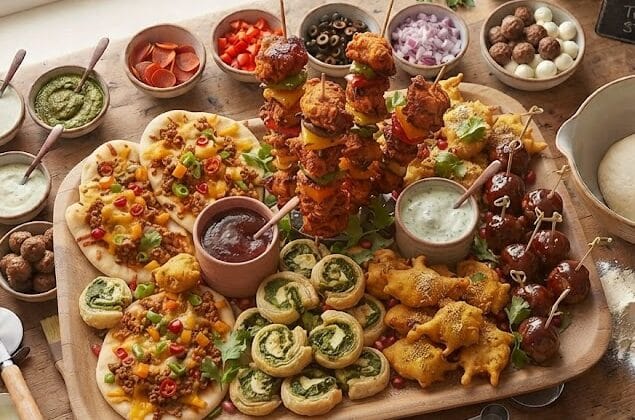
The most popular Pakistani party platter type featuring freshly made hot items like samosas, spring rolls, chicken rolls, pizza bites, and pakoras. Served immediately and eaten quickly, hot platters create the most excitement and are the first to be finished at any Pakistani gathering.

Chaat and street food platter:

A showstopper arrangement featuring dahi puri, samosa chaat, papri chaat, gol gappay cups, and aloo tikki all the beloved Pakistani street food flavors assembled on one dramatic platter with chutneys in small bowls. Perfect for dawats where guests enjoy interactive, self-serving food.

Kabab and tikka platter:

A meat lover’s dream shami kabab, chapli kebab, seekh kabab, chicken tikka, and boti arranged on a sizzling platter with onion rings, lemon wedges, and mint chutney. The centerpiece of any serious Pakistani dawat spread and the item guests remember most.

Mezze and dip platter:

A cold platter featuring hummus, baba ghanoush, cream cheese, raita, and various chutneys arranged with fresh vegetables, pita bread, and crackers. Popular for lighter, modern Pakistani gatherings and fusion dawats that blend international and desi flavors.

Nutritional Overview (Per Person):

25–35g

Protein

400–600

Calories

Varied

Vitamins

Balanced

Macros

Well-designed Party Platters can be nutritionally balanced when thoughtfully composed. Including protein-rich kababs and grilled tikka alongside vegetable-based chutneys and fresh salad elements provides a reasonable macronutrient balance per person. The key is intentional variety mixing fried items with grilled, heavy items with light, and ensuring the vegetable and protein components are not afterthoughts but equal participants in the platter design. A platter that includes kababs, fresh vegetables, yogurt-based dips, and some carbohydrate in the form of bread or crackers covers all major nutritional categories while remaining a genuinely festive, celebratory spread.
Protein:  Kababs, chicken tikka, and cheese items provide high-quality complete protein per serving.
Vitamins:  Fresh vegetable elements and herb chutneys add Vitamins A, C, and K to party platters.
Probiotics:  Yogurt-based dips and raita on platters support digestive health during heavy eating occasions.

Energy:  Carbohydrate elements like bread, samosa pastry, and spring rolls provide quick energy for guests.


Ingredients:

 Hot Snack Platter Essentials

Samosas (potato)

8–10 per platter freshly fried

Spring Rolls

8–10 per platter crispy

Chicken Rolls

6–8 per platter

Pizza Bites

10–12 per platter

Pakoras (mixed)

Generous handful

Shami Kabab

6–8 pieces

 Kabab and Tikka Platter Essentials

Seekh Kabab

6–8 skewers

Chapli Kebab

4–6 pieces

Chicken Tikka

8–10 pieces

Boti (beef/mutton)

8–10 pieces

Shami Kabab

6–8 pieces

Malai Boti

6–8 pieces

Garnish and Accompaniments

Mint Chutney

Small bowl freshly blended

Tamarind Chutney

Small bowl

Raita

Small bowl thick

Sliced Onion Rings

Raw separated

Lemon Wedges

Generous amount

Fresh Coriander

For garnish

Decoration and Presentation

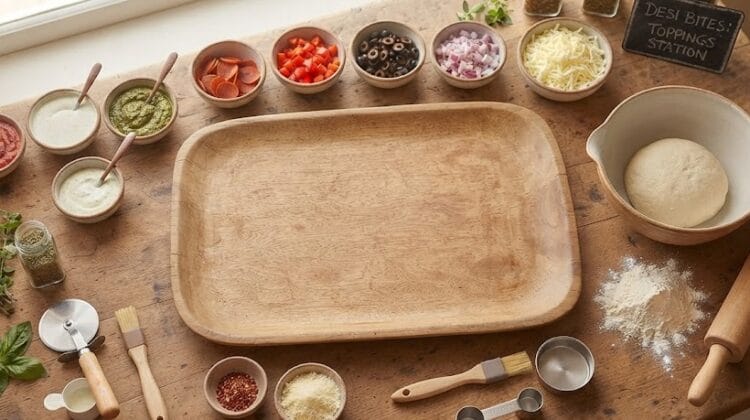
Large Wooden Board or Tray

Main platter base

Small Dipping Bowls

3–4 per platter

Parchment or Banana Leaf

Liner for rustic look

Fresh Rose Petals

For decoration optional


Step-by-step how to build the perfect Party Platter:

Plan your platter concept first: Before touching a single ingredient, decide the platter’s identity is it a hot snack platter, a kabab platter, a chaat platter, or a mixed platter? Every item you choose should belong to this concept. A platter that tries to be everything with no organizing idea ends up looking chaotic and feels unfocused. Choose one clear concept and build everything around it.
Party Platters on Desi Bites

Calculate quantities carefully: The golden rule for party platters is to plan 3–4 pieces of each item per person for a mixed platter with multiple options. For a kabab-focused platter that is the main event, allow 5–6 pieces per person. Always make 20% more than your calculation suggests party platters that run out before everyone has eaten are a host’s worst nightmare and a guest’s lasting memory.

Prepare all items before assembling: Every item on the platter should be fully cooked, seasoned, and at the correct temperature before you begin arranging. Never start assembling a party platter while some items are still cooking the first items arranged will be cold by the time the last items are placed. For hot platters, keep cooked items covered and warm until the moment of assembly.

Party Platters on Desi Bites

Place dipping bowls first: Before any food goes on the platter, position your dipping bowls, sauce cups, and small containers. These anchor points determine the flow of the entire arrangement. Place bowls at visually balanced positions not all in one corner and ensure they are stable and will not tip when the platter is carried.

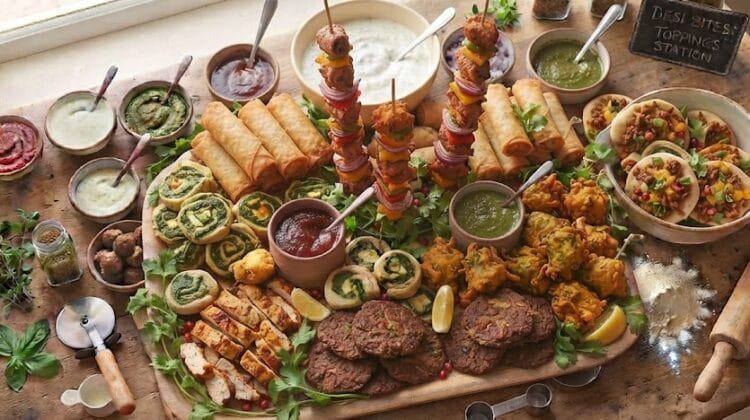
Arrange by height and color: Place the tallest items seekh kabab skewers, spring rolls at the back or center. Medium-height items like samosas and shami kabab go in the middle zones. Flat items like chapli kebab and sliced chicken tikka go at the front. Within each zone, alternate colors do not place all brown items together. Color contrast between items is what makes party platters visually stunning.
Party Platters on Desi Bites

Fill gaps with garnish: After all main items are placed, fill any visible gaps and empty spaces with garnish fresh coriander sprigs, lemon wedges, sliced onion rings, fresh mint leaves, or rose petals for special occasions. Gaps in a party platter make it look sparse and underloaded regardless of how much food is actually on it. A professional platter should look abundantly full from every angle.

Final check and serve immediately: Step back and look at the party platter from the guest’s perspective is it visually balanced? Are colors distributed evenly? Is it sufficiently full? Make any final adjustments, then serve immediately. Hot party platters must reach the table within 5 minutes of final assembly. Place on a trivet or heat pad to maintain temperature and instruct guests to serve themselves immediately.

Party Platters on Desi Bites


5 secrets for stunning Party Platters:

Secret 1 The rule of odd numbers:

Professional food stylists always arrange items in odd numbers 3, 5, or 7 of each type rather than 2, 4, or 6. Odd-numbered groupings look more natural, more abundant, and more visually dynamic than even-numbered arrangements. When you place 5 samosas rather than 4, or 7 shami kabab rather than 6, the platter immediately looks more professionally styled without any additional effort.

Secret 2 Hot items last, always:

The most common party platter mistake is arranging everything including hot items too far in advance. Hot items should always be the very last thing placed on the platter, immediately before serving. Arrange all cold elements, garnish, and sauce bowls in advance, then add hot samosas, freshly fried spring rolls, and hot kababs at the last possible moment for maximum impact when the platter reaches the table.

Secret 3 Height creates drama:

A flat party platter with every item at the same height looks uninspiring regardless of the food quality. Create height variation by leaning spring rolls against a small bowl, propping seekh kabab skewers at an angle, or placing some samosas on their sides and some upright. Height variation creates shadow, depth, and visual drama that flat arrangements completely lack.

Secret 4 Color balance is non-negotiable:

A party platter dominated by one color even if all the food is excellent looks monotonous and unappetizing. Always include at least 3 different colors in every party platter. In Pakistani platters, the natural colors of mint chutney (bright green), tamarind chutney (deep brown), lemon wedges (yellow), fresh coriander (green), onion rings (white/purple), and red chili garnish create natural color variety that makes platters look professionally styled.

Secret 5 Line the platter for elegance:

Lining the platter base with parchment paper, a banana leaf, or fresh lettuce leaves before arranging food on it elevates the presentation dramatically. The lined base creates a clean, intentional background that makes every item stand out. It also serves the practical purpose of keeping the platter cleaner and making leftover cleanup significantly easier after the gathering.

Party Platters variations for every occasion:

Ramadan Iftaar Party Platter:

Design around the iftaar tradition dates and water in the center as the essential first items, surrounded by samosas, pakoras, fruit chaat, dahi baray, and chutney. The iftaar party platter must include both sweet and savory elements and should be ready and arranged before the azaan so guests can begin eating the moment roza opens. The most important party platter occasion in Pakistan.

Birthday Party Snack Platter:

Child-friendly party platters focus on universally loved items pizza bites, mini burgers, chicken nuggets, mini sandwiches, and fruit skewers with bright, colorful presentation and easy-to-eat finger food formats. Arrange in a fun, colorful layout with themed picks and decorations. Avoid very spicy items and include a juice box station alongside the platter.

Shadi Dawat Reception Platter:

The most elaborate party platter category  multiple large platters featuring seekh kabab, chapli kebab, malai boti, shami kabab, and tikka arranged on decorated trays with rose petals, fresh herbs, and silver serving pieces. Quantity is paramount  shadi party platters must look extravagantly abundant. Plan for 8–10 pieces of each item per person for formal shadi receptions.

Game Night / Casual Party Platter:

Informal, easy-to-eat items are ideal for game night party platters  pizza bites, samosas, spring rolls, chips and dip, mini sandwiches. Prioritize items that can be eaten with one hand without making a mess. Arrange in a relaxed, generous heap rather than a formal style arrangement. Replenish regularly throughout the evening rather than presenting one large platter that sits and gets cold.

Vegetarian Party Platter:

A fully vegetarian party platter featuring aloo samosas, vegetable spring rolls, paneer tikka, dahi puri, hara bhara kabab, and mixed vegetable pakoras  served with mint chutney, tamarind sauce, and raita. Vegetarian party platters are increasingly popular in Pakistan for mixed gatherings and are often more colorful and visually diverse than meat-based platters.

Tips and tricks:

  1. Always prepare 20% more food than your guest count calculation suggests party platters that run empty are the most memorable hosting failure.
  2. Keep hot and cold items on separate platters mixing them causes hot items to cool rapidly and cold items to warm, compromi
  3. Prepare all chutneys and dips the day before they taste better after resting overnight and reduces day-of stress significantly.
  4. Use odd numbers for every grouped item 3, 5, or 7 pieces rather than 2, 4, or 6 for a more natural, abundant-looking arrangement.
  5. Label platters at formal events small handwritten labels identifying each item help guests make choices confidently, especially for items with spice levels that vary.
  6. Replenish rather than overfill it is better to replenish a smaller platter frequently than to overfill one large platter that becomes messy as guests serve themselves.
  7. Photograph before guests arrive the most beautiful moment of any party platter is the perfectly arranged pre-serving shot. Have your camera ready the moment the platter is complete.sing both.

Frequently Asked Questions:

Q1. How many items should be on a Party Platter?

The ideal party platter contains 5–8 different items for variety without overwhelming guests. Fewer than 5 items looks sparse. More than 8 creates visual chaos. For a mixed gathering, aim for 6 items 2 fried snacks, 2 kabab types, 1 vegetable element, and 1 chutney or dip. This provides genuine variety while keeping the platter organized and visually balanced.

Q2. How far in advance can I prepare Party Platters?

Cold elements chutneys, raita, vegetable garnish, and sliced items can be prepared 4–6 hours in advance and refrigerated. Cold platters can be arranged 1–2 hours before serving. Hot platters should only be arranged 5–10 minutes before serving hot items lose their texture and appeal very quickly once plated. Sauce bowls and garnish can be arranged in advance with hot items added at the very last moment.

Q3. How much food per person for Party Platters?

For party platters served as appetizers before a main meal, plan 3–4 pieces of each item per person. For party platters as the main food, plan 8–10 pieces of each item per person. For children, reduce quantities by approximately 40%. Always add a 20% buffer above your calculations — guests consistently eat more from party platters than any pre-event estimate predicts.

Q4. What is the best platter for a large Pakistani dawat?

For a large Pakistani dawat of 20+ people, a kabab and tikka platter is the most impressive and universally appreciated choice. Seekh kabab, chapli kebab, chicken tikka, malai boti, and shami kabab arranged on large decorated trays with mint chutney, onion rings, and lemon wedges creates the classic Pakistani dawat spread that guests associate with genuine hospitality and celebration.

Q5. How do I keep Party Platters warm during a long event?

For events lasting more than 30 minutes, use warming trays, chafing dishes, or electric hot plates under metal platters. Alternatively, serve party platters in multiple smaller batches bringing fresh hot platters from the kitchen every 20–30 minutes rather than one large platter that gradually cools. The multiple fresh batches approach also creates ongoing excitement and the impression of continuous abundance.

Q6. What chutneys should I serve with Party Platters?

The essential chutney trio for Pakistani party platters is: mint and coriander chutney (bright green, cooling, herby), tamarind chutney (deep brown, sweet-sour, complex), and raita (creamy, cooling, yogurt-based). These three together cover every flavor contrast needed to complement the full range of Pakistani party platter items. Garlic chutney is a popular fourth addition for guests who enjoy extra punch.

Q7. How do I make Party Platters look professional?

Five techniques instantly professionalize party platters: line the base with parchment or banana leaf; arrange in odd numbers; create height variation; ensure color balance throughout; and fill every gap with garnish. Additionally, use matching serving pieces, ensure the platter is generously full, and add one visually distinctive centerpiece item as a focal point.

Q8. Can I make Party Platters for Ramadan iftaar?

Iftaar is actually the single most important party platter occasion in Pakistan. An ideal iftaar party platter includes dates and water at the center, surrounded by samosas, pakoras, dahi baray, fruit chaat, and chutney. The platter should be completely arranged before the azaan so guests can begin immediately when roza opens a platter not ready at azaan time is considered a significant hosting failure during Ramadan.


You May Also Like:

Samosa Chaat Authentic Pakistani Street Food Recipe

All Recipes, Cooking Tips, Ingredient Guide, platters, Tips & Tricks

Reader Interactions

Leave a Reply Cancel reply

Your email address will not be published. Required fields are marked *

Recipe Rating


Primary Sidebar

Search

More to See

Garlic Dip on Desi Bites

Garlic Dip Easy Creamy Homemade Recipe Step by Step

July 26, 2026 By Desi Bites

Party Platters on Desi Bites

Party Platters Ultimate Pakistani Dawat Platter Ideas and Guide

July 25, 2026 By Desi Bites

Pizza Bites Easy Homemade Recipe Crispy and Cheesy

July 24, 2026 By Desi Bites

Karak Chai on Desi Bites

Karak Chai Authentic Pakistani Strong Milk Tea Recipe

July 23, 2026 By Desi Bites

  • Facebook
  • GitHub
  • Instagram
  • Pinterest
  • Twitter
  • YouTube

Footer

About Desi Bites

Welcome to Desi Bites,Discover authentic Pakistani recipes with simple steps and rich flavors.From biryani and karahi to desserts and daily meals, find delicious ideas for every occasion.

Cook. Taste. Enjoy.

Popular Recipes

  • Green Chutney Authentic Pakistani Hari Chutney Recipe
  • Garlic Dip Easy Creamy Homemade Recipe Step by Step
  • Party Platters Ultimate Pakistani Dawat Platter Ideas and Guide
  • Pizza Bites Easy Homemade Recipe Crispy and Cheesy
  • Karak Chai Authentic Pakistani Strong Milk Tea Recipe

Search

© 2026 Desi Bites | All Rights Reserved