Mango Butter Complete Guide, Homemade Recipe, Skin Benefits, and 5 Pakistani Variations
Complete guide Pakistani aam fusion Culinary + skincare Easy 5.0 / 5
Aam Ka
Makhan
Season
May–August
Dual
Culinary + skin
Easy
Skill level
The history of Mango Butter in Pakistani and global traditional knowledge:
Mango butter extraction from the seed kernel is documented in ancient Ayurvedic texts the Charaka Samhita and Sushruta Samhita both reference mango kernel preparations for medicinal and cosmetic purposes. Traditional South Asian women have used mango kernel fat as a hair treatment and skin moisturizer for centuries applying it to hair for shine and nourishment during Pakistan’s harsh summer heat, and to skin as a dry-season moisturizer during the cold winter months when the subcontinent’s dry winds cause significant skin dehydration. In traditional Pakistani village households, mango seeds were routinely dried, shelled, and the kernel fat extracted rather than discarded a practice of remarkable resource efficiency that modern zero-waste cooking movements are rediscovering with great enthusiasm.
Globally, mango butter has become a significant ingredient in the international natural beauty and cosmetics industry valued for its exceptional emollient properties, its light non-greasy texture, its gentle mango-adjacent fragrance, and its outstanding compatibility with human skin chemistry. West African mango butter (from the Shea-mango family) and Indian mango butter are now available in cosmetic formulations worldwide. In culinary applications, mango butter is increasingly used in West Africa as a cooking fat and in South Asian fusion cooking as a flavor-forward fat for baking and confectionery. Pakistan, with its extraordinary mango production and deeply established mango culture, is uniquely positioned to develop and celebrate its own mango butter tradition.
The science of Mango Butter fat composition and extraordinary properties:
What is inside a mango seed kernel?
Why Mango Butter melts at skin temperature:
Mango Butter as a culinary fat why it works:
Benefits of Mango Butter:
Vitamin E
Skin antioxidant
Stearic
Acid — emollient
Oleic
Acid — nourishing
Zero
Dairy — vegan
Ingredients:
For Homemade Mango Butter (From Pakistani Mango Seeds)
Pakistani Mango Seeds
10–15 large fully ripe
Oven or Sun
50°C oven 2–3 hrs or sun-dry
Heavy Knife / Nutcracker
For cracking seed shell
High-Power Blender
For grinding kernels to butter
For Pakistani Culinary Mango Butter Spread
Mango Butter
½ cup room temperature
Mango Pulp (Chaunsa)
Step-by-step Homemade Mango Butter from Pakistani Mango Seeds:

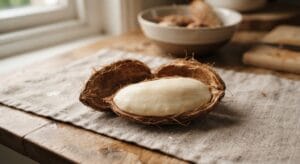
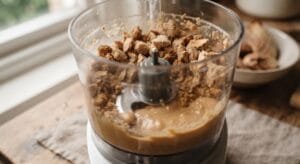

5 secrets for perfect Mango Butter:
Secret 1 Use fully ripe, fully eaten mango seeds only:
Secret 2 Dry kernels completely before grinding:
Secret 3 Use a double boiler for refinement never direct heat:
Secret 4 Blend mango pulp concentrate separately for culinary butter:
Secret 5 Store away from light and heat mango butter does not need refrigeration:
Mango Butter variations and applications:
Pakistani Culinary Mango Butter Spread (aam ka makhan signature):
Pakistani Mango Butter Mithai (kaju-aam fusion):
Mango Butter Baking Fat (dairy-free Pakistani baking):
Mango Butter Skin Moisturizer (Pakistani natural beauty):
Mango Butter Hair Mask (Pakistani desi beauty secret):
Tips and tricks:
- Use fully ripe Pakistani mango seeds only peak ripeness means maximum fat content and finest aromatic profile.
- Dry kernels completely until snap-brittle incomplete drying causes extraction failure and rapid rancidity.
- Use double boiler for refinement direct heat scorches vitamin E and aromatic compounds irreversibly.
- Concentrate mango pulp before adding to culinary butter fresh pulp water content causes immediate separation.
- Store in dark glass jar away from light and heat stable at room temperature 1–2 years without refrigeration.
- Collect seeds all season and dry in batches dried kernels keep 6 months, allowing year-round mango butter production.
- A tiny pinch of salt in culinary mango butter amplifies the mango flavor dramatically, as with all sweet preparations.
Frequently Asked Questions:
Q1. What is Mango Butter called in Pakistan?
Mango butter is called aam ka makhan or aam ki giri ka tel in Urdu. The mango seed kernel is aam ki giri. Older texts may refer to it as aam ka roghan (mango’s fat/oil). In cosmetic contexts, increasingly called “mango butter” in English as Pakistani beauty culture adopts international ingredient terminology. Traditional South Asian communities have known and used this preparation for centuries as a hair and skin treatment.
Q2. Is Mango Butter edible?
Yes pure mango butter is completely edible and safe for culinary use. Used as a cooking and food fat in South Asian and West African food cultures for centuries. Used in mithai, cooking oil blends, and as dairy butter substitute. The refined extracted butter is completely safe. Note: the whole raw kernel contains mangiferin and tannins that may cause mild digestive discomfort in sensitive individuals if consumed in large quantities, but the refined butter extraction has no such concern.
Q3. What does Mango Butter smell like?
Pure mango butter has a subtle, gentle, pleasantly warm aroma not the intense tropical fruity mango fruit smell expected, but a mild, slightly nutty, faintly tropical scent that is unmistakably mango-adjacent without being overwhelming. Chaunsa mango butter: particularly delicate, sweet fragrance. Sindhri: slightly earthier, more robust scent. Refined mango butter has a milder, more neutral scent than unrefined. Subtle enough to blend harmoniously with other ingredients without overpowering them.
Q4. Can I use Mango Butter instead of shea butter or cocoa butter?
Yes excellent substitute for both. Vs shea butter: lighter, less waxy texture, less intense aroma preferable for facial application and oily skin types. Vs cocoa butter: comparable fatty acid composition (stearic + oleic dominant), similar melting point, but with subtle mango note rather than cocoa bitterness. Substitutes in chocolate-making and confectionery at 1:1 at significantly lower cost. For skincare: moisturizing and skin barrier effects are comparable to shea butter.
Q5. How long does homemade Mango Butter last?
Outstanding shelf life: 1–2 years at room temperature. High stearic acid content and natural vitamin E provide exceptional oxidative stability no refrigeration necessary. Storage: cool (below 30°C), dark (away from sunlight), dry (no moisture). Signs of spoilage: rancid or musty smell, significant color change, unusual texture. Refrigerated: 2–3 years. During Pakistani summer heat above 35°C, bottom shelf of refrigerator is ideal to maintain solid consistency.
Q6. Which Pakistani mango variety makes the best Mango Butter?
All varieties produce viable butter. Chaunsa: most delicately fragrant large fat-rich seeds, exceptional subtle floral-mango aroma. Sindhri: slightly more robust, higher yield due to large seed size. Anwar Ratol: very aromatic reflecting variety’s intensely perfumed fruit. Langra: good quality, slightly more neutral-flavored. For culinary use where mango flavor is desired: Chaunsa and Anwar Ratol finest. For skincare where minimal scent is preferred: Sindhri and Langra slightly more neutral. Corn Cakes
Q7. Can Mango Butter be used on the face?
Yes particularly well-suited for facial application. Non-comedogenic despite richness does not clog pores, suitable for combination and mildly oily skin. Dry and normal: chickpea-sized amount after washing, absorbs fully in 2–3 minutes. Oily skin: blend with aloe vera gel for lighter formulation. Vitamin E beneficial for Pakistani skin exposed to intense sun. Phytosterols may help reduce hyperpigmentation over time. Avoid if known mango allergy (rare but documented).
Q8. How many mango seeds does it take to make Mango Butter?
Approximately 10–15 large Pakistani mango seeds (Chaunsa or Sindhri size) yield approximately 50–80g finished mango butter enough for 2–3 months daily skincare or several culinary batches. Yield improves with fully ripe seeds from large-seeded varieties and complete drying before extraction. During mango season, collecting seeds from household consumption means the butter is essentially cost-free a remarkable value from what would otherwise be discarded kitchen waste.
You May Also Like:
Tomato Confit Complete Guide, Slow-Roasted Recipe, Pakistani Fusion Uses, and 5 Variations

