Garlic Paste Complete Guide, Homemade Pakistani Recipe, Health Benefits, and 5 Variations

Garlic Paste Complete Guide, Homemade Pakistani Recipe, Health Benefits, and 5 Variations

Complete guide     Pakistani kitchen essential       2 months shelf life                                               Easy       5.0 / 5

Garlic Paste is arguably the single most important, most universally used, and most fundamentally essential prepared ingredient in the entire Pakistani kitchen a smooth, intensely pungent, deeply aromatic paste made from fresh garlic blended to a concentrated ivory-white preparation that forms the flavor foundation of virtually every Pakistani curry, every marinade, every grilled preparation, and every slow-cooked dish that has made Pakistani cuisine one of the most celebrated and most deeply loved food cultures in the world. Garlic paste lehsun ka paste in Pakistani Urdu is not merely a convenience preparation; it is the invisible but absolutely indispensable scaffolding upon which the extraordinary flavor complexity of Pakistani cooking is built, the ingredient whose presence in the first hot seconds of oil determines whether a dish will achieve the deep, layered, complex savory character that defines authentic Pakistani food.
No Pakistani kitchen is without garlic paste it is one of the two foundational paste preparations (alongside ginger paste) that virtually every Pakistani home cook prepares in bulk every 1–2 weeks and keeps refrigerated as a constant, always-ready kitchen resource. The combination of garlic paste and ginger paste adrak lehsun ka paste is so fundamental to Pakistani cooking that it functions as a single compound ingredient, added simultaneously in the early stages of virtually every curry, qorma, karahi, and biryani masala as the aromatic base upon which the entire flavor structure of the dish is constructed.
In this complete guide you will find everything needed to understand, make, and genuinely master garlic paste its extraordinary 5,000-year history in human medicine and cooking, the remarkable science of allicin and garlic’s documented health benefits, the crucial difference between fresh-made and commercially bottled versions, step-by-step perfect homemade recipe, five outstanding variations from pure Pakistani lehsun paste to roasted garlic paste to ginger-garlic combination, and all the professional tips that guarantee consistently smooth, intensely flavored, perfectly preserved results every single time.

Lehsun

Ka Paste

10 min

Prep time

2 months

Freezer life

Easy

Skill level


The 5,000-year history of Garlic in Pakistani and world food culture:

Garlic Allium sativum has one of the longest and most continuously documented histories of any cultivated plant on earth, with evidence of cultivation and use dating back over 5,000 years to ancient Mesopotamia, Egypt, China, and the Indus Valley civilization that was the direct cultural ancestor of modern Pakistani civilization. Ancient Egyptian papyri include garlic in medical prescriptions and worker rations garlic was reportedly given to the laborers who built the pyramids to maintain their strength and prevent disease. The oldest surviving Indian medical texts the Charaka Samhita and the Sushruta Samhita both prescribe garlic extensively for dozens of conditions including cardiovascular disease, digestive complaints, respiratory infections, and parasitic infestations, with a clinical accuracy that modern pharmacological research has remarkably validated.
In Pakistani food culture, garlic entered the culinary tradition through the same Indus Valley and subsequent Mughal cultural heritage that shaped all of Pakistani cooking. Mughal court cooking the most refined and most documented food culture of the medieval Islamic world used garlic as a foundational aromatic in virtually every preparation, and the Mughal culinary tradition’s integration into Pakistani cooking means that garlic has been a central flavor element in Pakistani cuisine since the cuisine’s very formation. The preparation of garlic paste specifically peeling, blending, and storing garlic in concentrated paste form developed as a practical solution to the time-consuming task of peeling and crushing fresh garlic for every individual dish, and has been a standard Pakistani kitchen practice for as long as reliable blending technology has been available.
Globally, garlic is the second most widely cultivated allium after onion produced in quantities exceeding 28 million tonnes annually, with China producing approximately 80% of global supply. Pakistan is both a significant garlic producer (particularly in Sindh and Balochistan where the finest Pakistani garlic is grown) and an enormous garlic consumer Pakistani per-capita garlic consumption is among the highest in the world, reflecting garlic’s absolutely central role in Pakistan’s food culture. The specific preparation of garlic paste as a standardized, shelf-stable cooking ingredient is one of Pakistan’s most important practical culinary innovations transforming a perishable, labor-intensive fresh ingredient into a convenient, consistently available kitchen essential.

The science of Garlic Paste allicin and extraordinary health benefits:

What allicin is and why it matters:

Allicin diallyl thiosulfinate is garlic’s most pharmacologically active compound and the source of both its characteristic pungent aroma and its extraordinary health properties. Allicin does not exist in intact garlic cloves it is produced enzymatically when garlic cells are damaged: the enzyme alliinase (stored in cell vacuoles) contacts its substrate alliin (stored in the cytoplasm) when the cell wall is disrupted by cutting, crushing, or blending. The alliinase-alliin reaction produces allicin within seconds of cell damage. This is why freshly crushed garlic paste has dramatically stronger flavor and stronger health properties than whole garlic the blending process creates maximum allicin production by maximizing cell wall disruption.
Why homemade garlic paste is healthier than commercial:
Commercial bottled garlic paste typically contains preservatives including citric acid and sometimes sodium benzoate that significantly reduce allicin content allicin is chemically unstable and degrades rapidly, particularly in acidic environments. Commercial processing also typically involves heat treatment that destroys alliinase the enzyme needed to produce allicin. The result is commercial garlic paste with a fraction of the allicin content and therefore a fraction of the health benefit of freshly made homemade garlic paste. Homemade garlic paste made with minimal additives (just salt and oil for preservation) retains vastly more allicin and therefore far more health benefit than any commercial equivalent.
The 10-minute rule maximize allicin before cooking:
Heat destroys alliinase the enzyme that produces allicin. This means that garlic paste added directly to hot oil immediately has significantly less time to produce allicin than garlic paste that has been allowed to rest after blending before being exposed to heat. Research shows that allowing freshly made or freshly opened garlic paste to rest at room temperature for 10 minutes before cooking maximizes allicin formation the enzyme-substrate reaction proceeds to completion during this rest period. This simple 10-minute rest before cooking significantly increases the health benefit of garlic paste in cooked dishes without any change to the flavor.

Health Benefits of Garlic Paste:

Allicin

Antimicrobial

Heart

Protective

Immune

Boosting

Anti

Inflammatory

Garlic paste is one of the most extensively researched functional foods in nutritional science with over 5,000 peer-reviewed research papers documenting its health properties across multiple body systems. The cardiovascular benefits of garlic are the most robustly established: multiple meta-analyses confirm that regular garlic consumption reduces blood pressure (both systolic and diastolic), reduces LDL cholesterol, reduces triglycerides, reduces platelet aggregation (blood clotting tendency), and improves endothelial function (arterial wall health). For a population like Pakistan’s, with high rates of cardiovascular disease, the daily consumption of garlic paste in cooking represents a genuinely meaningful and scientifically validated dietary cardiovascular risk reduction strategy.
Allicin most potent natural antimicrobial:  Allicin inhibits dozens of bacterial strains including antibiotic-resistant species, multiple fungal pathogens, and several viruses making daily garlic paste consumption a meaningful immune support strategy.
Cardiovascular protection: Multiple meta-analyses confirm garlic reduces blood pressure, LDL cholesterol, triglycerides, and platelet aggregation among the most robustly evidenced dietary cardiovascular interventions.
Immune system support:  Research shows regular garlic consumption reduces the incidence, duration, and severity of common colds and respiratory infections particularly relevant for Pakistani families during winter and monsoon seasons.
Anti-cancer properties:  Epidemiological studies consistently show inverse associations between garlic consumption and cancers of the stomach, colon, esophagus, pancreas, and breast allicin and related organosulfur compounds have documented anti-tumor properties in laboratory research.

Ingredients

 For Classic Pakistani Garlic Paste (Lehsun Ka Paste Signature)

Fresh Garlic

500g peeled cloves, shoots removed

Salt

1.5 tsp flavor + preservation

Neutral Oil

2 tbsp blend + sealing layer

Lemon Juice

1 tbsp optional brightener

 For Pakistani Ginger-Garlic Paste (Adrak Lehsun Most Used)

Fresh Garlic

300g peeled

Fresh Ginger

200g  peeled, roughly chopped

Salt + Oil

1.5 tsp + 3 tbsp

Turmeric + Water

¼ tsp + 2–3 tbsp if needed

 For Roasted Garlic Paste (Mild and Complex)

Whole Garlic Heads

6 large tops cut to expose cloves

Olive Oil

3 tbsp for roasting

Salt + Black Pepper

1 tsp + ½ tsp

Roast Temperature

180°C for 40–45 min in foil


Step-by-step Classic Pakistani Garlic Paste (signature recipe):
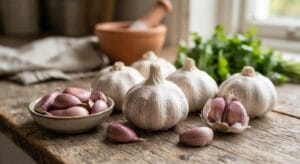
Select and source the finest fresh garlic quality is the foundation: Pakistani garlic quality varies significantly by origin and season. The finest garlic for paste making is firm, dry, papery-skinned, and intensely aromatic when a clove is broken a pungent, sharp, almost eye-watering aroma indicates high allicin precursor content and therefore high flavor and health potency. Avoid garlic that is soft, has begun sprouting green shoots (the green shoot is edible but bitter and indicates aging), shows any mold on the outer skin, or has cloves that are hollow or shrunken. Pakistani local garlic from Sindhi growing regions is generally excellent more pungent and more flavorful than imported garlic. Buy in 500g–1kg quantities for bulk paste making.
Garlic Paste on Desi Bites
Peel efficiently the most time-consuming step made fast: Peeling large quantities of garlic is the primary labor investment in garlic paste making but several techniques dramatically reduce the time required. Method 1 (fastest): separate all cloves from the bulb and place in a large metal bowl. Place a second bowl of the same size on top, creating a sealed chamber. Shake vigorously for 30–60 seconds the cloves rattle against each other and the bowl surfaces, breaking and removing the papery skins completely. Open to find approximately 80% of cloves fully peeled with minimal effort. Method 2: soak cloves in warm water for 5–10 minutes the skins loosen and slip off with minimal pressure. Remove the green shoot from the center of each clove if present it contributes bitterness.
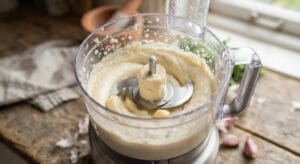
Blend in stages technique for perfectly smooth paste: Add peeled garlic cloves to a blender or food processor. Add salt the salt helps break down the garlic cell walls more effectively during blending and acts as a natural preservative. Add neutral oil oil lubricates the blending process and produces a smoother, more emulsified paste than water-based blending. Begin at low speed to break down the cloves, then increase to maximum speed. Blend for 2–3 minutes, scraping down sides every 30 seconds, until the paste is completely smooth no visible chunks of garlic, a homogeneous, smooth, ivory-white paste. Add water one tablespoon at a time only if needed for blending minimum water produces maximum flavor concentration.
Garlic Paste on Desi Bites
Allow the 10-minute allicin rest maximize health benefit: After blending, allow the freshly made garlic paste to rest uncovered at room temperature for exactly 10 minutes before using in cooking or before storing. During this rest, the alliinase-alliin enzymatic reaction that produces allicin proceeds to completion the blending has disrupted all cell walls simultaneously, bringing alliinase and alliin into maximum contact. The 10-minute rest allows this reaction to complete, producing the maximum possible allicin content. After 10 minutes, allicin formation is substantially complete and the paste is ready for use or storage. This simple waiting step is one of the most health-impactful yet virtually costless improvements possible to garlic paste preparation.
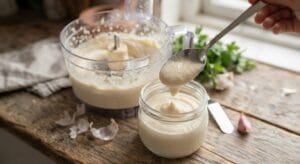
Transfer to sterilized glass jar correct storage technique: Sterilize a glass jar (wash thoroughly, rinse, place in 120°C oven for 10 minutes to kill bacteria and mold spores). Allow jar and paste to cool to room temperature before combining never put hot paste in a cold glass jar. Transfer the rested garlic paste to the sterilized jar using a clean, completely dry spoon any moisture introduction from a wet spoon accelerates spoilage. Fill to approximately 1cm below the jar rim. Press the paste down firmly with the back of the spoon to eliminate all air pockets trapped within the paste air pockets create anaerobic conditions that can promote spoilage organisms.
Garlic Paste on Desi Bites
Apply oil sealing layer the preservation essential: Pour a thin layer of neutral oil (2–3 tablespoons) over the surface of the garlic paste in the jar creating an unbroken, complete oil covering of the paste’s surface approximately 3–5mm thick. This oil layer is the primary preservation mechanism it physically prevents oxygen from contacting the paste surface, stopping both oxidative browning (which turns garlic paste from ivory-white to gray or yellow) and inhibiting the aerobic microorganisms that cause spoilage and off-flavors. Restore this oil layer after every use before returning the jar to the refrigerator. A properly oil-sealed garlic paste refrigerated in a sterilized glass jar keeps for 3–4 weeks with excellent quality.
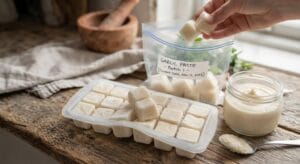
Freeze in ice cube trays for long-term storage: For the most practical and most shelf-stable garlic paste storage, freeze immediately after the 10-minute allicin rest before any quality degradation begins. Spoon the paste into ice cube trays, filling each compartment approximately ¾ full (approximately 1.5–2 tablespoons per cube a standard single-recipe addition for a Pakistani family curry). Place the filled ice cube tray in the freezer. After 4–6 hours when completely frozen solid, transfer the garlic paste cubes to a labeled, sealed freezer bag. Frozen garlic paste maintains excellent quality for up to 2 months. Thaw a cube directly in the hot oil of a curry pan no advance thawing needed.
Garlic Paste on Desi Bites

5 secrets for perfect Garlic Paste:

Secret 1 Remove green shoots they cause bitterness:

The small green shoot that appears in the center of aging garlic cloves visible when a clove is cut in half lengthwise is the beginning of a new garlic plant growing from the stored energy of the clove. This green shoot contains bitter, harsh compounds including chlorophyll breakdown products and immature allicin precursors that contribute a distinctly unpleasant bitterness to garlic paste made without their removal. In fresh, newly harvested garlic the shoot is absent or barely visible. In older garlic approaching the end of its storage life, the shoot can be substantial. Always split each clove with a thumbnail or knife and remove the green shoot before blending this single step eliminates garlic paste bitterness completely.

Secret 2 Use oil not water for blending superior flavor and shelf life:

The choice of blending liquid oil versus water dramatically affects garlic paste quality across two dimensions. Flavor: garlic’s primary flavor compounds (allicin and related organosulfur compounds) are fat-soluble they dissolve into oil and distribute more evenly and more completely than into water, producing a more uniformly flavored, more aromatic paste. Shelf life: oil displaces water from the paste’s microenvironment, reducing the water activity that bacteria and mold require for growth. Oil-blended garlic paste keeps significantly longer refrigerated than water-blended paste. Use the minimum oil needed for smooth blending typically 1 tablespoon per 100g garlic for a blender, slightly more for a food processor.

Secret 3 Salt immediately and generously it is a flavor enhancer and preservative simultaneously:

Salt serves a dual role in garlic paste that makes its generous addition a non-negotiable element of every quality preparation. As a flavor enhancer: salt amplifies and rounds the garlic’s natural pungency, converting the sometimes harsh, sometimes flat character of plain blended garlic into a fully developed, deeply savory preparation that smells and tastes as garlic should. As a preservative: salt draws water out of garlic cells through osmosis, lowering the water activity of the paste and making the environment inhospitable to the bacteria and molds that cause spoilage. The correct ratio: approximately 1 teaspoon of salt per 250g of garlic enough for meaningful preservation without making the paste unpleasantly salty in cooked dishes.

Secret 4 Blend at room temperature never cold garlic from refrigerator:

Garlic that has been refrigerated is cold and firm its cell walls are slightly hardened by the cold temperature and its aromatic volatile compounds are less mobile and less released than in room-temperature garlic. Cold garlic produces a blander, less aromatic paste because the alliinase enzyme that produces allicin is less active at lower temperatures, and the volatile aromatics remain more bound to the cell structure. Allow refrigerated garlic to come to room temperature for 30 minutes before blending for measurably more flavorful, more aromatic garlic paste. Freshly purchased garlic at ambient temperature needs no adjustment. This small step produces a noticeably more pungent and more complex finished paste.

Secret 5 Make in bulk and freeze the smart Pakistani kitchen habit:

The most time-efficient, most quality-consistent, and most practically valuable garlic paste approach for Pakistani home cooks is bulk preparation with immediate freezing. Making a large batch (500g–1kg of garlic) every 3–4 weeks rather than small batches every few days achieves several quality and efficiency advantages simultaneously. Bulk blending produces a more consistent, more homogeneous paste than repeated small batches. The quality of frozen garlic paste is virtually identical to freshly made superior to refrigerated paste that has been stored 2–3 weeks. Ice cube portions mean perfect measured quantities are always available. A 500g batch of garlic paste made in 15 minutes and frozen provides 3–4 weeks of perfectly portioned, perfect-quality garlic paste with essentially zero daily effort.

Garlic Paste variations:
Classic Pakistani Lehsun Ka Paste (pure garlic signature):

Pure fresh garlic, salt, and oil blended to a perfectly smooth, intensely pungent ivory-white paste that is the foundational cooking ingredient of Pakistani cuisine. This pure garlic paste goes into the hot oil of every karahi, qorma, daal, and biryani masala at the moment when maximum raw pungency is needed to permeate the cooking fat and infuse the entire dish. The pure version is the most versatile suitable for every Pakistani cooking application without any additional flavor that might conflict with specific dishes. Made in bulk every 2–3 weeks and frozen in portions, pure lehsun paste is the single most impactful Pakistani kitchen efficiency upgrade possible.

Pakistani Ginger-Garlic Paste (adrak lehsun most used combination):

A 60:40 or 50:50 blend of garlic and ginger the most commonly used Pakistani kitchen preparation, so fundamental to Pakistani cooking that it functions as a single compound ingredient. Blend peeled garlic and peeled ginger together with salt, oil, and a pinch of turmeric. The turmeric serves as both a natural antimicrobial (curcumin inhibits a wide range of microorganisms) and a subtle color stabilizer. Ginger-garlic paste is the aromatic base of the vast majority of Pakistani curries its combined pungency, warmth, and complexity creates the first layer of flavor in the hot oil that determines the character of the entire dish. Store and freeze exactly as pure garlic paste.

Roasted Garlic Paste (mild, sweet, deeply complex):

Cut the tops off whole garlic heads to expose the cloves. Drizzle with olive oil, season with salt and pepper. Wrap in foil and roast at 180°C for 40–45 minutes until completely soft, golden, and caramelized throughout. Squeeze the roasted cloves from their skins they should pop out as soft, golden, spreadable paste. Blend briefly with olive oil and salt. Roasted garlic paste is dramatically different from raw garlic paste the high heat converts the harsh raw allicin compounds into hundreds of gentle, sweet, nutty, complex flavor molecules through Maillard reaction and caramelization. The result is mild enough to eat straight on bread, versatile enough to add to mashed potatoes, pasta, hummus, and Pakistani-fusion preparations where gentle garlic depth is preferred over raw pungency.

Garlic Herb Paste (Pakistani fusion green version):

Blend fresh garlic with fresh coriander, fresh mint, green chili, ginger, lemon juice, salt, and olive oil producing a vibrant green, intensely aromatic paste that simultaneously delivers garlic’s pungency and fresh herb brightness. This garlic herb paste bridges green chutney and pure garlic paste functioning as a marinade for tikka, a sauce for grilled meats, a dip for naan and pakoras, and a spread for sandwiches and wraps. The herb addition makes this version less shelf-stable than pure garlic paste use within 1 week refrigerated or freeze in small portions for up to 3 weeks. The combination of garlic and fresh Pakistani herbs creates one of the most aromatic and most versatile Pakistani fusion pastes possible.

Garlic-Onion Paste (Pakistani curry base complete aromatic foundation):

Blend garlic with fried golden onion (birista the crispy fried onion used as a biryani and qorma garnish and base) plus a small amount of oil and salt. The fried onion provides deep caramelized sweetness and body that transforms garlic paste from a two-dimensional pungency into a complete aromatic curry base combining garlic’s sharp savory depth with onion’s sweet complexity in a single concentrated paste. This garlic-onion paste added to hot oil in the early stages of a curry provides the full aromatic foundation in a single spoonful rather than the multi-step onion frying and garlic adding that standard Pakistani curry technique requires. Particularly time-saving for biryani making and rich qorma preparations.

Tips and tricks:

  1. Remove green shoots from every clove they cause bitterness that ruins the paste’s flavor completely.
  2. Blend with oil not water fat-soluble garlic compounds distribute more evenly in oil, producing more aromatic, longer-lasting paste.
  3. Allow 10-minute allicin rest after blending allows enzyme reaction to complete for maximum health benefit before cooking or storing.
  4. Salt generously 1 tsp per 250g garlic. Salt is both a flavor amplifier and a natural preservative.
  5. Always seal with oil layer restores after every use to prevent oxidation, browning, and microbial spoilage.
  6. Freeze in ice cube trays 2-month shelf life, perfect portioned quantities, zero daily effort. The smartest Pakistani kitchen habit.
  7. Blend at room temperature cold garlic produces blander paste. Allow refrigerated garlic 30 minutes at room temperature first.

Frequently Asked Questions:

Q1. What is Garlic Paste called in Pakistan?

Garlic paste is called lehsun ka paste in Urdu. The ginger-garlic combination is adrak lehsun ka paste the single most used Pakistani cooking preparation added to virtually every curry. In everyday kitchen speech, often simply called “paste” when context is clear. Commercial brands include National, Shan, and various regional brands though homemade is universally considered superior in flavor and health benefit. Tomato Confit

Q2. How long does homemade Garlic Paste last?

Refrigerated: 3–4 weeks in sterilized glass jar with complete oil seal, clean dry spoon each use. Frozen in ice cube trays: 2 months with minimal quality loss frozen is virtually indistinguishable from freshly made. Signs of spoilage: off smell beyond normal pungency, visible mold, gray-green discoloration throughout (not just surface). Never store in plastic absorbs garlic odor and flavor.

Q3. Is homemade Garlic Paste better than commercial?

Yes significantly better in every dimension. Flavor: 100% fresh garlic without citric acid, stabilizers, or preservatives that dull commercial flavor. Health: allicin content dramatically higher commercial heat treatment and citric acid destroy alliinase (the enzyme producing allicin), eliminating most health benefit. Aroma: incomparably more fragrant fresh. Cost: fraction of commercial per gram. The only advantage of commercial is convenience which frozen homemade also provides.

Q4. How much Garlic Paste replaces fresh garlic?

Standard conversion: 1 teaspoon garlic paste = 2–3 medium cloves. Specific: ½ tsp = 1 clove; 1 tsp = 2–3 cloves; 1 tbsp = 6–8 cloves; 2 tbsp = approximately 1 small head. Applies to homemade paste commercial may need slightly more due to processing. Paste distributes more evenly than crushed cloves so can be more intensely present err toward slightly less initially.

Q5. Why does my Garlic Paste turn green or blue?

Harmless and completely safe chemical reaction not spoilage or mold. Garlic’s sulfur compounds react with trace amino acids and copper or iron from water or utensils to produce pyrrole pigments (same class as chlorophyll). Acid (lemon juice) accelerates this. Discolored paste is completely safe with normal flavor purely aesthetic. To prevent: use filtered water, avoid acidic additions during blending, store in glass not metal, add lemon juice only immediately before use.

Q6. Can I freeze Garlic Paste?

Yes freezing is the optimal long-term storage method. Freeze in ice cube trays immediately after the 10-minute allicin rest for maximum health benefit preservation. Each cube (1.5–2 tbsp) = one standard recipe quantity. Maintains flavor, allicin content, and aroma for 2 months — superior to refrigerated paste after 3–4 weeks. Use directly from frozen drop cube into hot oil, thaws in seconds. Label freezer bags with date.

Q7. What is the ratio of garlic to ginger in Pakistani Ginger-Garlic Paste?

Most common: 60% garlic to 40% ginger by weight garlic pungency dominant, ginger warmth clearly present. Some families prefer 50:50 for more balanced, ginger-forward paste. Minority prefer 70:30 garlic-to-ginger for more intensely garlic-dominant. The 60:40 ratio is the standard commercial and most widely used home kitchen ratio best balance for the widest range of Pakistani applications from biryani to qorma to karahi.

Q8. How do I peel large quantities of garlic quickly?

Three effective methods. Double Bowl Shake (fastest): separate cloves into large metal bowl, place second same-size bowl on top, shake vigorously 30–60 seconds 80% fully peeled by friction. Warm Water Soak: soak cloves 5–10 minutes skins loosen and slip off with minimal pressure. Microwave: 15–20 seconds steam inside loosens skin so it pops off easily. Combine double bowl shaking + brief soaking for remaining cloves handles 500g garlic in under 10 minutes.


You May Also Like:

Mango Butter Complete Guide, Homemade Recipe, Skin Benefits, and 5 Pakistani Variations

Leave a Comment

Your email address will not be published. Required fields are marked *

Scroll to Top