

• Skip to main content
  • Skip to primary sidebar
  • Skip to footer
  • Home
  • All Recipes
    • Drinks
      • Lassi
      • Sharbat
      • Chai Recipes
    • Breakfast
      • Halwa Puri
      • Paratha Recipes
      • Omelette & Eggs
    • Breads
      • Chapati & Roti
      • Naan Recipes
      • Puri Recipes
    • Vegetarian Recipes
      • Aloo Dishes
      • Daal Recipes
      • Paneer Dishes
      • Sabzi (Vegetables)
    • Mutton & Beef Recipes
      • Beef Nihari
      • Chapli Kebab
      • Mutton Biryani
      • Mutton Karahi
    • Soups & Stews
      • Haleem
      • Paya Soup
      • Chicken Soup
    • Seafood Recipes
      • Fish Fry
      • Fish Curry
      • Prawn Recipes
    • Sauces & Chutneys
      • Raita
      • Imli Chutney
      • Mint Chutney
    • Snacks & Street Food
      • Chaat
      • Sandwiches
      • Samosa & Pakora
  • Chicken Recipes
    • Chicken Curry
    • Chicken Karahi
    • Chicken Biryani
    • BBQ & Grilled Chicken
  • Rice Dishes
    • Pulao
    • Biryani
    • Khichdi
  • Desserts
    • Cake & Cookies
    • Kheer & Halwa
    • Traditional Sweets
  • Ramadan Special
    • Sehri Recipes
    • Iftar Recipes
    • Sheer Khurma
  • Eid Special
    • Eid ul Adha Recipes
    • Eid ul Fitr Dishes
    • Meethai & Sweets
  • Tips & Tricks
    • Cooking Tips
    • Ingredient Guide
    • Kitchen Hacks
  • About Desi Bites
DesiBites Logo

Desi Bites

Recipes That Taste Like Home

Ad example
You are here: Home / All Recipes / Karak Chai Authentic Pakistani Strong Milk Tea Recipe

Karak Chai Authentic Pakistani Strong Milk Tea Recipe

July 23, 2026 · Desi Bites · Leave a Comment

Karak Chai on Desi Bites

Karak Chai Authentic Pakistani Strong Milk Tea Recipe

10 minutes         cups3          Very Easy          5.0 / 5

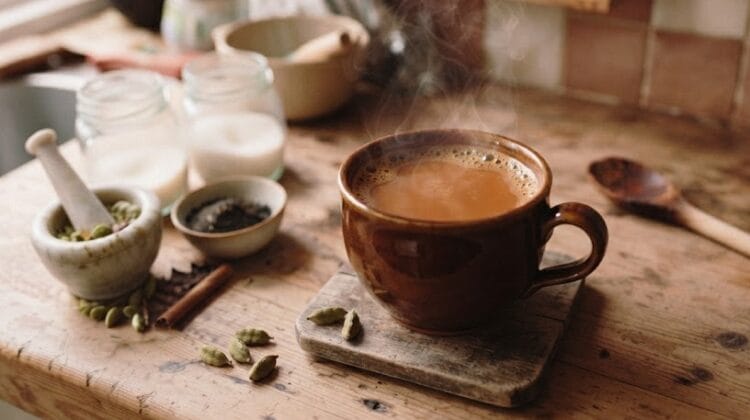
Karak Chai is not simply tea it is the heartbeat of Pakistani daily life. From the first cup before fajr prayers to the late-night gathering with friends, from the roadside dhaba where truck drivers warm their hands around steel glasses to the finest drawing rooms where it is served with rusks and biscuits Karak Chai is present everywhere in Pakistan, at every hour, the constant companion of every mood, every occasion, and every moment of connection between people. The word “karak” means strong, forceful, bold in Urdu and that is exactly what this tea is. Deep amber in color, intensely brewed, rich with the fat of full-cream milk, fragrant with cardamom, and perfectly sweet a great cup of Karak Chai is one of the most deeply satisfying drinks you can find anywhere in the world.
What separates Karak Chai from ordinary tea is not the ingredients which are remarkably simple but the technique. The defining method is dhoodh patti brewing tea leaves directly in milk rather than water. When tea leaves simmer in full-fat milk, the fat extracts flavor compounds far more efficiently than water alone, producing a cup simultaneously stronger and creamier than any conventionally brewed tea. This is the soul of Pakistani chai culture, and once you master this technique, you will never make chai any other way.
In this complete guide, you will find everything needed to make perfect Karak Chai at home the dhoodh patti technique in complete step-by-step detail, how to choose the right tea leaves, the cardamom ratio that elevates without overpowering, the khaulao method that dhaba chai walas use for extraordinary dark color and depth, five regional variations from across Pakistan, and the cultural context that makes Karak Chai so much more than just a drink.

10

Ready in (min)

2

Cups

3

Main ingredients

Easy

Difficulty


Why Karak Chai is Pakistan’s most beloved drink:

Pakistan is one of the world’s largest tea-consuming nations the average Pakistani drinks 3 to 4 cups of chai every single day, regardless of season, weather, or occasion. Tea arrived in the subcontinent during British colonial rule but was rapidly and completely transformed into something uniquely Pakistani. Karak Chai strong, milky, spiced with cardamom, brewed entirely in full-fat milk bears almost no resemblance to the pale, watery brew the British themselves preferred. It reflects the Pakistani character: generous, warm, intense, deeply satisfying, and always best when shared.
The dhaba culture of Pakistan is inseparable from Karak Chai. Along every highway, at every truck stop, outside every small shop and office building the chai wala brews enormous aluminium pots of intensely strong chai all day long, straining it through a fine mesh into steel glasses and serving customers who will remember that specific cup for hours. At its best, roadside dhaba Karak Chai achieves something most home cooks struggle to replicate that specific combination of intensely brewed tea, full-fat milk, and perfect balanced sweetness that makes every cup feel like a small celebration. This guide teaches you exactly how to achieve that result at home.
Karak Chai is also deeply embedded in Pakistani hospitality culture. Offering a cup of hot strong chai to a guest is the first act of welcome in virtually every Pakistani home before food is offered, before conversation fully begins, the chai is already on the stove. To refuse chai in a Pakistani home is to cause genuine concern. Karak Chai is not merely a drink; it is an expression of care, welcome, and belonging.

Choosing the right tea for Karak Chai:

The tea you choose fundamentally shapes the final character of your Karak Chai. Four types are most relevant:

Tapal Danedar (most authentic choice):

The most popular tea brand in Pakistan and the one most associated with authentic Karak Chai. “Danedar” means granular the distinctive granular texture releases flavor rapidly, producing an intensely dark, full-bodied brew that is the standard by which most Pakistanis measure their chai.

Brooke Bond Supreme:

Pakistan’s second most popular chai brand a bold, malty CTC Assam blend that produces a slightly smoother Karak Chai than Danedar, with less astringency and a more rounded flavor. Many chai lovers prefer Supreme for its consistency.

Loose leaf Assam tea:

For more complex, nuanced Karak Chai good quality loose-leaf Assam or Assam-Ceylon blend. Use 1.5x the quantity compared to granular tea for equivalent strength. Produces a more sophisticated, layered flavor.

Kashmiri green tea (kahwa style):

In KPK and Gilgit-Baltistan, green tea brewed with cardamom, cinnamon, and cloves creates a fragrant, lighter alternative to the standard black tea Karak Chai of Punjab and Sindh.


Nutritional Value (Per Cup):

45mg

Caffeine

120

Calories

Antioxidants

From Tea

Calcium

From Milk

Karak Chai is more than comfort it delivers genuine health benefits through its key ingredients. Black tea is exceptionally rich in polyphenols including theaflavins and thearubigins powerful antioxidants associated with reduced inflammation and improved cardiovascular health. The caffeine in Karak Chai provides mental alertness without the jitteriness of coffee, while L-theanine in tea creates calm, focused energy prized for morning productivity. The full-fat milk provides calcium for bone health and complete protein. Cardamom present in every authentic cup has documented antimicrobial, digestive, and anti-inflammatory properties, which is why a cup of Karak Chai with extra cardamom is Pakistan’s most prescribed home remedy for colds, sore throats, and malaise.
Antioxidants:  Theaflavins in black tea provide powerful anti-inflammatory and cardiovascular protective properties.
Mental clarity:  Caffeine and L-theanine together create focused alertness without anxiety.
Cardamom benefits:  Supports digestive health, freshens breath, and has proven antimicrobial properties.
Calcium:  Full-fat milk in Karak Chai provides significant calcium for bone health per cup.

Ingredients:

 For Authentic Dhoodh Patti Style

Full-Fat Milk

2 cups — whole milk only

Tea Leaves (Danedar/Supreme)

2 heaped tsp

Sugar

2–3 tsp to taste

Green Cardamom (Elaichi)

3–4 pods slightly crushed

Water (optional)

¼ cup for lighter version

Fresh Ginger (optional)

½ inch piece crushed

 For Masala Chai Version (Optional Spices)

Cinnamon Stick

Small piece

Cloves

2–3

Black Peppercorns

3–4

Star Anise

½ piece — optional

For Serving

Steel or Glass Cups

Pre-warmed before pouring

Fine Mesh Strainer

For clean pouring

Rusks or Biscuits

Classic dunking accompaniment

Paratha

For breakfast pairing


Step-by-step instructions:

Choose your method dhoodh patti or mixed: For authentic Karak Chai, use the dhoodh patti method all milk, no water. For a slightly lighter cup, use ¾ cup water and 1¼ cups milk. The pure dhoodh patti method produces richer, creamier, more intensely flavored chai and is the gold standard of Pakistani tea culture that this recipe is built around.
Karak Chai on Desi Bites

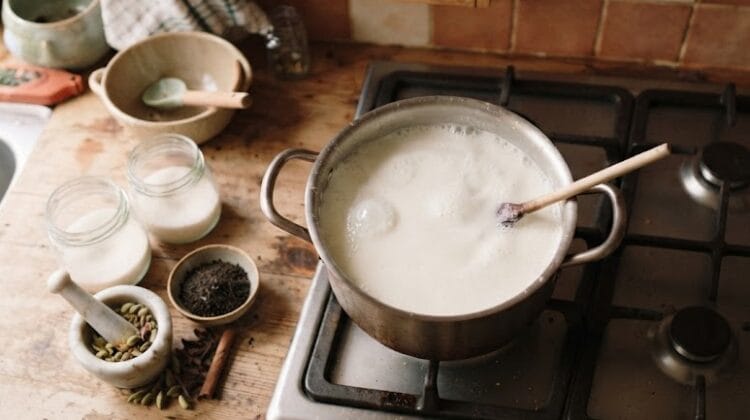
Add cardamom to cold milk: Pour milk into a small heavy-bottomed pot. Add the crushed cardamom pods directly to the cold milk before placing on heat. This is critical heating cardamom from cold allows its essential oils to infuse gradually into the milk, producing far more aromatic Karak Chai than adding cardamom to already-hot liquid.

Bring slowly to a gentle simmer: Place the pot on medium heat and bring slowly to a gentle simmer not a rolling boil. Once you see small bubbles forming at the edges and steam rising steadily, the milk is at the right temperature for the tea leaves. This controlled approach to heat is important for the final quality of the chai.
Karak Chai on Desi Bites

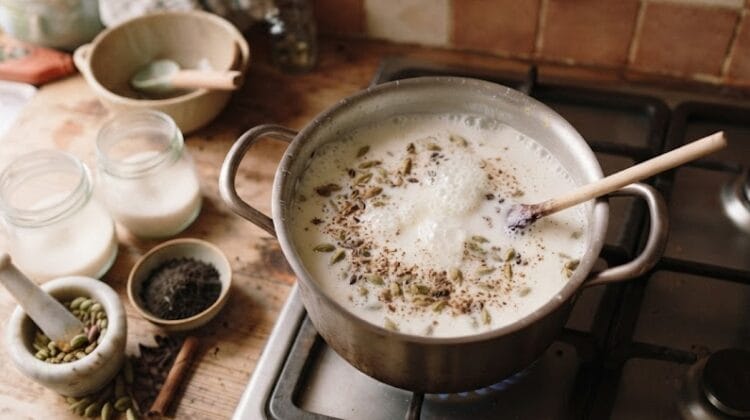
Add tea leaves directly into the milk: Add the tea leaves into the gently simmering milk. This is the defining moment of the dhoodh patti technique the tea brewing in milk rather than water. Stir once to submerge all the leaves completely and reduce heat to minimum. The leaves will immediately begin releasing their color and flavor into the surrounding milk.

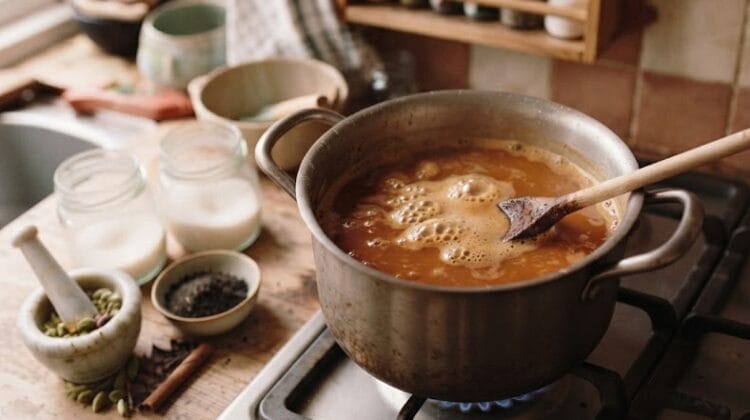
Brew on low heat for 4–5 minutes: Allow the tea to brew gently on minimum heat, stirring occasionally. The Karak Chai should develop a deep, rich amber-brown color that becomes progressively darker as the brewing continues. A gentle, slow extraction produces a smoother, less astringent chai than rapid boiling do not rush this step.
Karak Chai on Desi Bites

The khaulao technique (dhaba secret): After brewing, increase heat to bring the chai to a full rolling boil for 30 second then reduce immediately back to low. Repeat this boil-reduce cycle 2–3 times. This “khaulao” technique is the single most important dhaba secret for extraordinary Karak Chai color and depth. Each boiling cycle caramelizes some milk sugars and deepens the color from pale amber to rich mahogany.

Add sugar, strain, and serve: Add sugar and stir until completely dissolved. Taste and adjust sweetness authentic Karak Chai is noticeably sweet, which balances the strong tea and rich milk. Strain immediately through a fine mesh strainer into pre-warmed cups. Serve at once Karak Chai is at its absolute best in the first 3–5 minutes after pouring. Enjoy!

Karak Chai on Desi Bites


5 dhaba secrets for perfect Karak Chai:

Secret 1 Full-fat milk only:

The most important ingredient decision in Karak Chai is milk fat content. Full-fat milk creates the rich, creamy body that defines great Karak Chai. Semi-skimmed produces a thinner, paler, less satisfying cup. Always use the richest milk available ideally desi non-homogenized milk for the most authentic result.

Secret 2 Brew in milk, not water (dhoodh patti):

The technique that separates Pakistani Karak Chai from ordinary tea. The fat in milk extracts different, smoother flavor compounds from tea leaves than water does, producing a creamier, more rounded flavor impossible to replicate any other way. Never add milk to separately brewed tea and expect Karak Chai quality the sequence matters completely.

Secret 3 The khaulao (repeated boiling) technique:

Repeating the boil-reduce cycle 2–3 times after brewing is the dhaba trick that most home cooks never know. Each cycle caramelizes milk sugars and deepens the chai’s color and complexity. This is what gives dhaba Karak Chai its characteristic dark mahogany color that home chai almost never achieves without this specific technique.

Secret 4 Cardamom in cold milk:

Add crushed cardamom to cold milk before heating not to hot milk. Cardamom’s volatile aromatic compounds need time to infuse gradually as the liquid heats. Adding cardamom to already-hot milk causes the aromatics to evaporate before they fully infuse into the chai, wasting most of the spice’s fragrance.

Secret 5 Pre-warm the cups:

Swirl a small amount of hot water in the serving cups and discard before pouring Karak Chai. This prevents the hot chai from losing temperature on contact with a cold cup ensuring every sip is as hot as the first. Standard practice at every quality chai stall across Pakistan and the detail that separates good service from great.

Karak Chai variations:

Adrak Karak Chai (ginger chai):

Add a half-inch piece of freshly crushed ginger along with the cardamom at the cold milk stage. This is the most popular variation of Karak Chai across all of Pakistan ginger’s sharp warmth perfectly complements the rich full-milk brew and adds powerful digestive and anti-inflammatory benefits that make it the go-to morning chai for millions of Pakistanis.

Masala Karak Chai:

Add cinnamon, cloves, black pepper, and star anise alongside the cardamom for a warming, complex spiced version. Particularly popular in winter months across Pakistan and the classic home remedy for cold and flu its warming spices provide genuine relief from congestion and sore throats while the rich milk base soothes and nourishes. Garlic Naan

Kahwa (green tea version):

Replace black tea with green tea and add cardamom, cinnamon, and a few saffron strands. Traditional kahwa is served without milk  lighter and more fragrant than standard Karak Chai. Popular in KPK and Gilgit-Baltistan where this style of tea has been made for centuries, often served to guests in decorated teapots.

Kashmiri Pink Chai (Noon Chai):

Use special Kashmiri green tea, brew with baking soda to create the characteristic pink color, then add full-fat milk and a pinch of salt. A completely unique, beautiful pink chai unlike standard Karak Chai but equally beloved in its region. Served with crushed pistachios and cream floating on top at Kashmiri weddings and gatherings.

Pheeki Chai (lighter version):

Half the tea leaves, increased water ratio, and only 2 minutes of steeping produces a milder, gentler cup. Preferred by many who find the intense dhoodh patti too strong for evening drinking. Perfect when you want the warmth and comfort of Karak Chai without the full caffeine impact of the standard recipe.

Tips and tricks:

  1. Always use full-fat milk low-fat milk produces a thin, unsatisfying Karak Chai. Full-fat is non-negotiable for authentic results.
  2. Add tea leaves to simmering milk, never boiling violently boiling milk scorches the leaves and produces harsh, bitter Karak Chai.
  3. Crush cardamom pods gently just enough to crack them open. Over-crushing releases bitter compounds from the skin that make the chai harsh.
  4. Use a heavy-bottomed pot thin pots cause uneven heat distribution and milk scorching at the bottom. A heavy pot produces consistent, even brewing throughout.
  5. Taste during brewing adjust strength by time (2–6 minutes) based on your preference. Always taste rather than guessing at a fixed time.
  6. Strain immediately when desired strength is reached leaving tea leaves in contact continues extracting bitter tannins even on low heat.
  7. Karak Chai scales perfectly  for 6 cups, multiply all ingredients by 3 and use a larger heavy pot. Same dhoodh patti technique at any volume.

❓ Frequently Asked Questions

Q1. What is the difference between Karak Chai and regular tea?

Karak Chai is significantly stronger, creamier, and more intensely flavored than regular tea. The key difference is the dhoodh patti method brewing tea leaves directly in full-fat milk rather than water. Regular tea brewed in water with milk added separately produces a paler, thinner, far less satisfying result. “Karak” means strong this chai uses more tea per cup and a unique milk-brewing technique that ordinary tea cannot replicate.

Q2. Why does my Karak Chai taste bitter?

Bitterness in Karak Chai has two main causes: over-brewing (reduce steeping to 3–4 minutes maximum longer extracts harsh tannins); or adding tea to violently boiling milk (always add to gently simmering milk, not a full rolling boil). Using too many tea leaves also causes bitterness the standard ratio is 1 heaped teaspoon per cup. Always taste during brewing and adjust rather than assuming a fixed time.

Q3. Can I make Karak Chai without cardamom?

Technically yes, but it will not truly be Karak Chai it will simply be strong Pakistani milk tea. Cardamom is the defining aromatic ingredient and its absence is immediately noticeable. If cardamom is unavailable, a small piece of cinnamon provides a partial substitute. Even a single crushed pod makes an enormous difference to the final character and fragrance of the chai.

Q4. How many cups of Karak Chai per day is healthy?

Most nutritionists suggest 3–4 cups maximum daily. Moderate tea consumption is associated with genuine health benefits, but excessive Karak Chai particularly the strong dhoodh patti version can cause caffeine-related issues including insomnia and palpitations, and the milk and sugar content contributes significant calories. Three cups daily provides clear benefits without downsides for most healthy adults.

Q5. What is the best tea brand for Karak Chai?

Tapal Danedar and Brooke Bond Supreme are the two best choices for authentic Pakistani Karak Chai — both widely available at Pakistani grocery stores worldwide. Tapal Danedar produces the boldest, darkest, most robust cup that most closely matches the classic dhaba Karak Chai experience. For international alternatives, any strong CTC Assam tea produces excellent results.

Q6. Can I make Karak Chai without sugar?

Yes but unsweetened Karak Chai has a noticeably different character. Sugar balances the astringency of the strong tea and the richness of the full-fat milk, creating the characteristic sweet-strong-creamy balance that defines the drink. Without sugar, bitterness and richness can feel unbalanced. If reducing sugar, try jaggery (gurh) which adds a distinctive caramel note with a lower glycemic impact than refined sugar.

Q7. What is the khaulao technique exactly?

Khaulao means “to boil” in Urdu. The technique involves bringing brewed Karak Chai to a full rolling boil for 30 seconds, then reducing heat immediately and repeating this cycle 2–3 times. Each boiling cycle caramelizes some milk sugars and deepens the tea color from pale amber to rich mahogany. This is the primary reason dhaba Karak Chai looks and tastes more intense than most home-made chai.

Q8. What food pairs best with Karak Chai?

Karak Chai pairs beautifully with savory Pakistani breakfast foods aloo paratha, anda (egg), and various achaar. For snacking, rusks dunked in chai is the most classic and beloved Pakistani combination. Plain biscuits, sheermal, and samosas are also popular companions. The boldness of Karak Chai means it stands up to even the most strongly flavored foods, making it the ideal all-day accompaniment.


You May Also LIke:

Samosa Chaat Authentic Pakistani Street Food Recipe


All Recipes, Chai Recipes, Drinks

Reader Interactions

Leave a Reply Cancel reply

Your email address will not be published. Required fields are marked *

Recipe Rating


Primary Sidebar

Search

More to See

Garlic Dip on Desi Bites

Garlic Dip Easy Creamy Homemade Recipe Step by Step

July 26, 2026 By Desi Bites

Party Platters on Desi Bites

Party Platters Ultimate Pakistani Dawat Platter Ideas and Guide

July 25, 2026 By Desi Bites

Pizza Bites Easy Homemade Recipe Crispy and Cheesy

July 24, 2026 By Desi Bites

Karak Chai on Desi Bites

Karak Chai Authentic Pakistani Strong Milk Tea Recipe

July 23, 2026 By Desi Bites

  • Facebook
  • GitHub
  • Instagram
  • Pinterest
  • Twitter
  • YouTube

Footer

About Desi Bites

Welcome to Desi Bites,Discover authentic Pakistani recipes with simple steps and rich flavors.From biryani and karahi to desserts and daily meals, find delicious ideas for every occasion.

Cook. Taste. Enjoy.

Popular Recipes

  • Green Chutney Authentic Pakistani Hari Chutney Recipe
  • Garlic Dip Easy Creamy Homemade Recipe Step by Step
  • Party Platters Ultimate Pakistani Dawat Platter Ideas and Guide
  • Pizza Bites Easy Homemade Recipe Crispy and Cheesy
  • Karak Chai Authentic Pakistani Strong Milk Tea Recipe

Search

© 2026 Desi Bites | All Rights Reserved